Altitude as a metric for quality and value.
By Ricky Dyson
–
We’re in amongst refreshing our packaging and labels, and discussing what information is most useful vs desirable to a consumer to be on said labels. In a survey we sent out regarding the packaging refresh, more than one response said they wouldn’t buy a bag of coffee if altitude wasn’t included on the label: “No altitude is a dealbreaker.”
That response stood out. Not because altitude isn't useful, but because it made me wonder if altitude has been used as a measure of quality and perceived value, rather than what it really is: one indicator of a farm's growing environment. And truthfully, it’s something I might’ve said many years ago.

Manasses; Sítio Três Barras at 1300m in SP, Brazil.
Altitude and Quality
Historically, there's a good reason altitude became one of coffee's earliest quality indicators. Coffees grown higher up often travelled better, tended to be denser, and frequently tasted cleaner than coffees grown in hotter lowlands.
Commercial grading systems like SHB (Strictly Hard Bean) and SHG (Strictly High Grown) were developed in Central American commercial terms within national coffee industries and before long altitude had become shorthand for quality – less pests and diseases, high density, and so on. So, it wasn't entirely wrong, perhaps just a little incomplete.
For years, much of the industry has marketed the idea that altitude is synonymous with quality, and it perhaps became one of the most overused metrics. It can sound scientific and impressive. It's a number that seems to promise high quality and high value. But really, altitude itself doesn't make coffee great.
Coffee generally benefits from growing conditions that encourage slow, even cherry maturation. Slower maturation is associated with changes in sugar metabolism, organic acids, and other compounds that influence roasting and cup quality. Altitude is one way of arriving at those conditions, but it certainly isn't the only one.
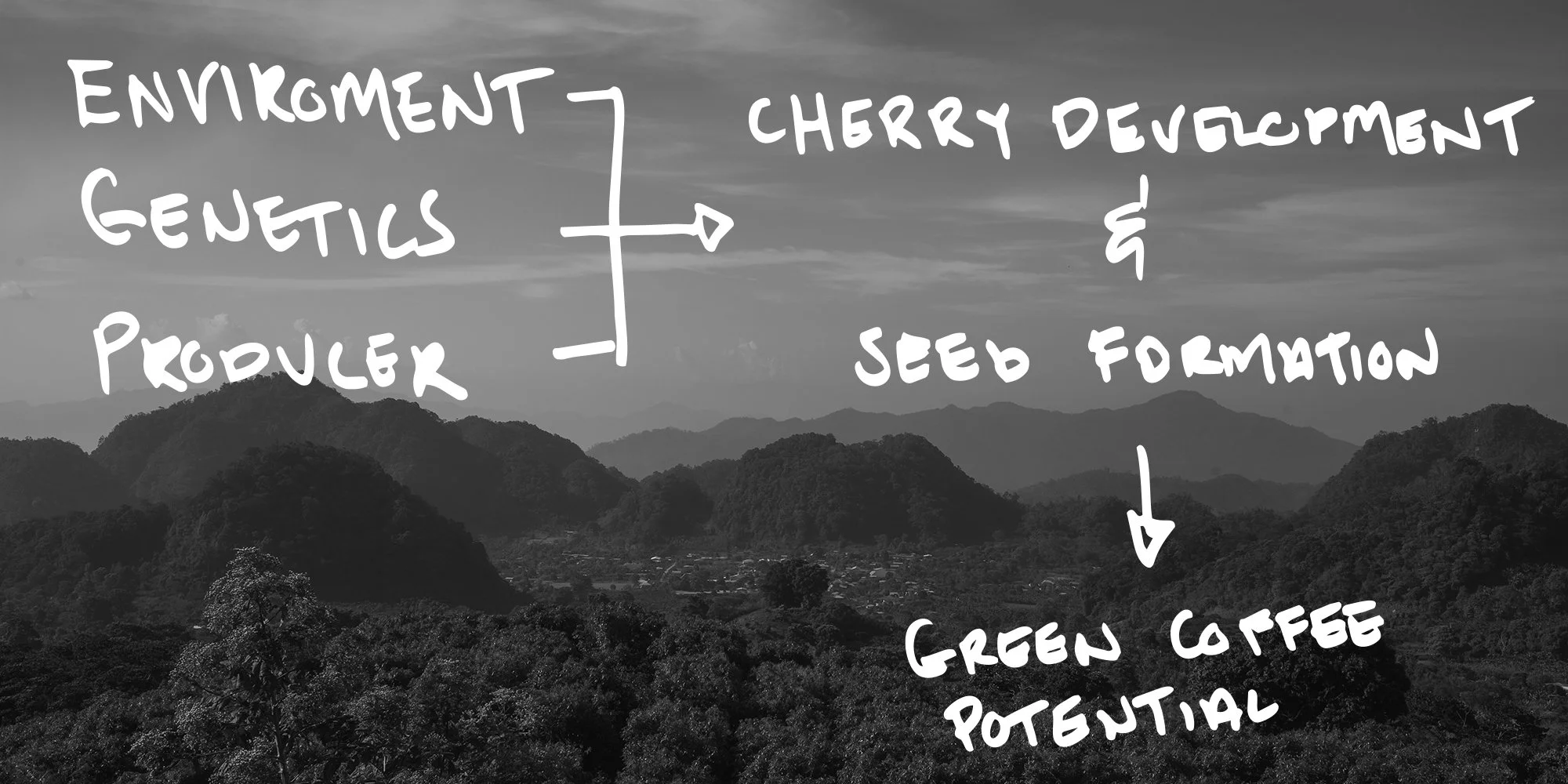
Climate is only one of the environmental influences on quality coffee.
What constitutes high-altitude entirely depends on where you are.
Similar growing conditions can exist at very different elevations around the world. A farm at 1,700m in Colombia and a farm at 1,000m in Brazil may experience remarkably similar climate patterns during the growing season. And so, a farm in Colombia may appear “better” by altitude alone. But altitude is meaningful relative to latitude; it's a useful (albeit incomplete) proxy for climate, but not a guarantee of quality.
This also explains why altitude isn't directly comparable between producing countries. Near the equator, where sea-level temperatures remain consistently high, growers often need to climb to 1,500–2,000m to reach those cooler growing conditions. Move a few thousand miles north or south, however, and the same climate patterns can occur hundreds of meters lower.
The reason Brazil is such a useful example is that it challenges one of specialty coffee's strongest assumptions. For some, Brazil is still associated with low-altitude commercial coffee rather than the exceptional specialty coffee we've come to know at Idle Hands. And yet, in parts of Brazil, those same favorable growing conditions can occur between 900 and 1,300m. Regions like Cerrado Mineiro, Mantiqueira de Minas, and Região Vulcânica produce elegant, complex coffees at elevations that might seem "low" compared with many producing countries. They're also home to numerous producer partners of ours, as well as several winners from the 2025 Brazil Cup of Excellence. Compare altitude and the differences might appear noteworthy. Compare climate, and they can become far less dramatic.
Climate itself is influenced by far more than just altitude. Latitude, slope, aspect, topography, wind, sun exposure, cloud cover, water availability, and countless local factors all influence the conditions under which coffee grows. And even climate is only one part of a coffee's growing environment. Soil, ecology and, perhaps most importantly, the countless decisions made by the producer all contribute to the final cup.
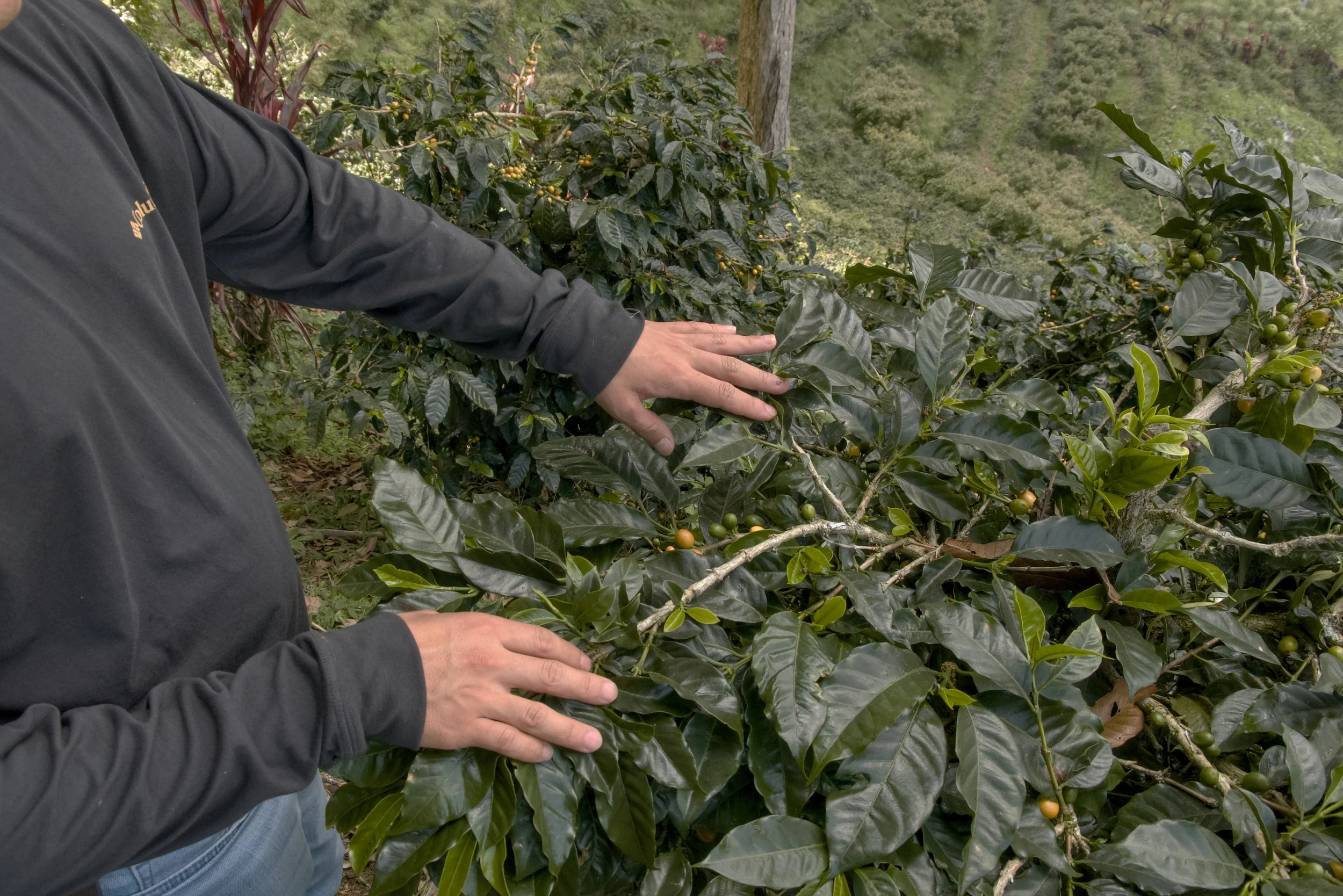
The coffee tree doesn't know it's growing at 1,800m. It responds to its inputs: temperature, water, sunlight, and nutrients.
Any single metric, removed from context, can become reductive. Context is what gives information meaning.
And I think that’s been much of the point of this. It’s not entirely about altitude. Because altitude isn't unique in this conversation. It's simply the clearest example of a broader tendency in specialty coffee to reduce incredibly complex systems into single numbers or descriptors. On occasion, this can be seen with Varieties, Processing Methods, Fermentation, Roast Color, Cup Scores, Brix, Water Activity, and so on. All of them are useful, none alone are sufficient.
So... Should we put altitude on the label?
Honestly, I'm still not sure. My instinct is probably not. I think, perhaps unintentionally, our industry has created a hierarchy where one shouldn't really exist. Maybe we're guilty of confusing correlation with causation. In doing so, roasters have elevated altitude from a useful piece of context to one of specialty coffee's strongest signals of quality and perceived value.
If that's true, I suspect altitude isn't the only example (looking at you, anaerobic fermentation). Specialty coffee has a habit of reducing complex systems into simple descriptors. Those descriptors can be incredibly useful, but they're rarely the whole story. It's a reminder to be thoughtful about the information we choose to put on our labels and online. Not because the details don't matter, but because no single detail can provide the full context.
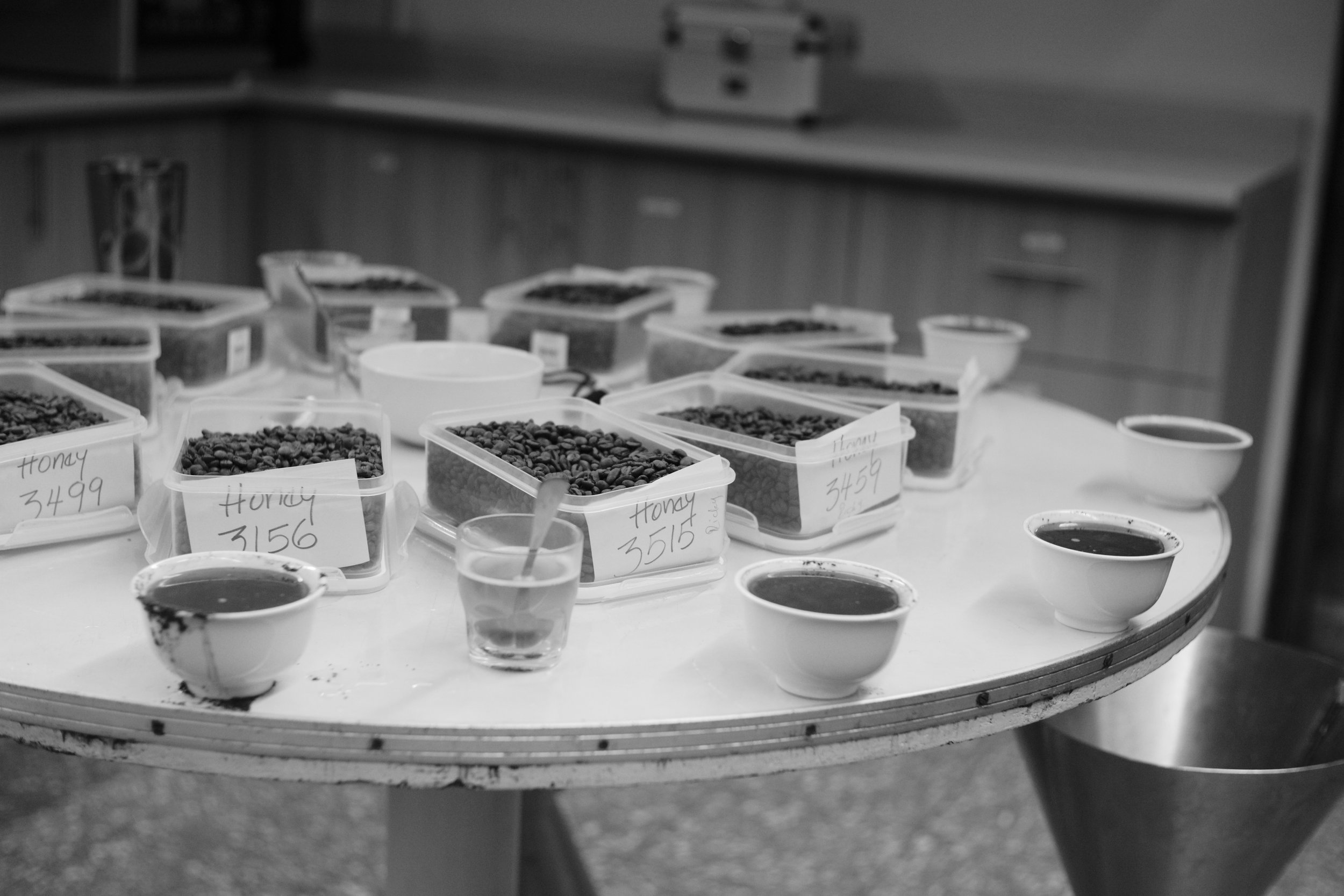
It's important to acknowledge where this perspective comes from. I'm writing this as someone who sits comfortably on the consuming side of the supply chain. This isn't an argument about how producers should grow or market their coffee, nor is it a criticism of those who include altitude as a marketing tool. It’s a reflection on how we, importers, exporters, roasters, educators, judges, coffee media, and consumers, have chosen to communicate and interpret coffee once it leaves the farm.
Some producers farm at 2,000m because that's where generations before them settled. Others produce exceptional coffee at 900m because that's where coffee thrives in their corner of the world. In many cases, they didn’t choose their elevation, and one cares no less about their coffee and farm than the other. They simply learned to work with the environment they were given.
If writing this has changed my thinking at all, it's been less about altitude and more about communication. The information and metrics we choose to share inevitably shapes how people come to value coffee. So, is altitude useful? Sometimes, absolutely. I think the interesting question isn't whether we should talk about altitude; it's whether we're communicating what actually matters.